
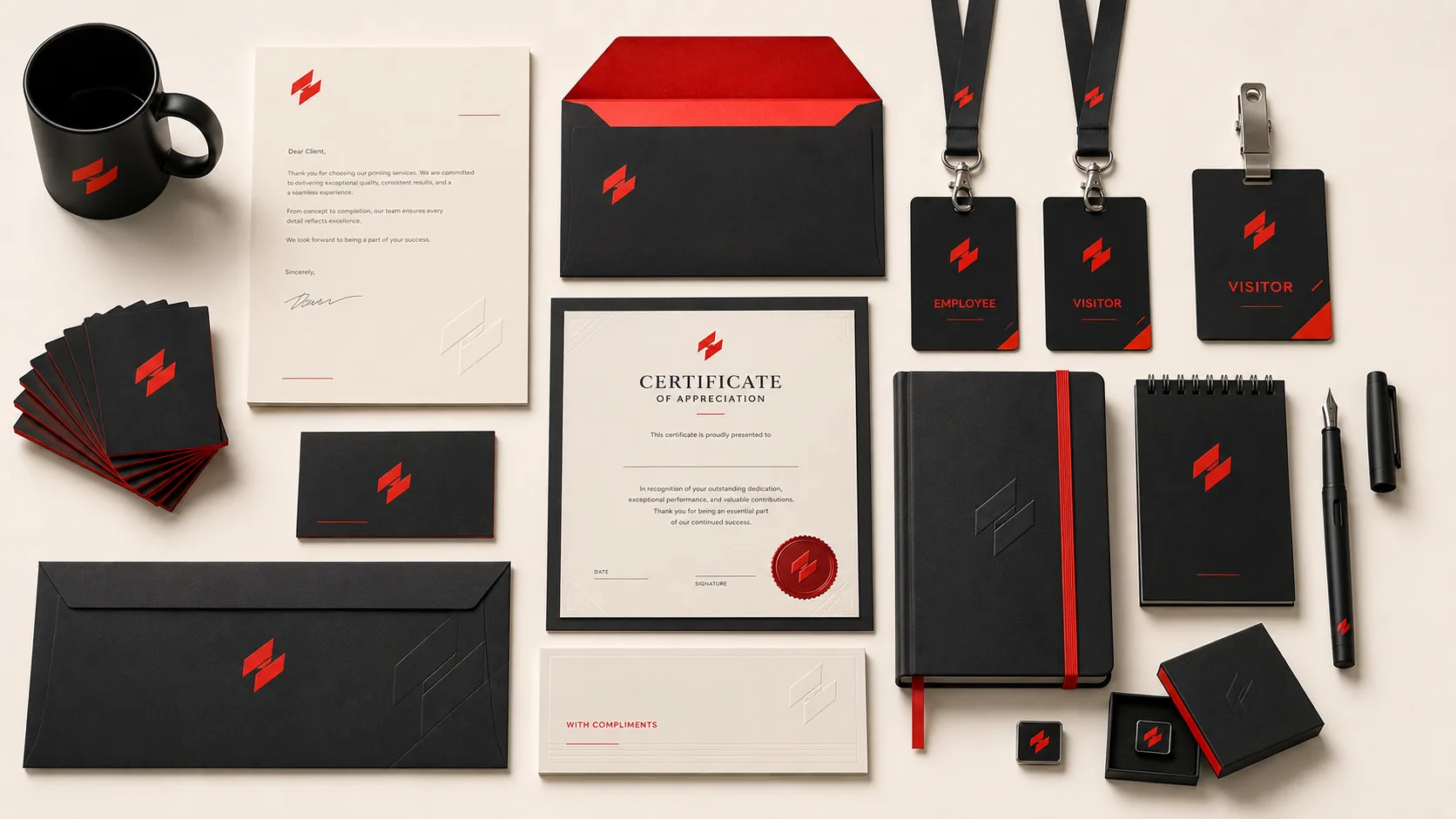
Branding Materials
Print that makes every impression count. The everyday essentials that carry your identity — finished with foiling, embossing and spot-UV for a tactile, premium feel.
What is Branding Materials?
Branding materials are the physical touchpoints that carry your identity into every meeting, mailbox and reception desk. From business cards and letterheads to envelopes, ID cards, certificates and corporate diaries, each piece signals credibility and reinforces recognition long after a conversation ends.
A consistent, well-crafted print set turns everyday stationery into a marketing asset. Premium stocks and finishes such as foiling, embossing and spot-UV add tactile weight and visual polish that screens cannot replicate, helping brands feel considered, trustworthy and worth remembering.
The finishes that make a brand feel expensive
The seven finishes that define premium print. Business card standard in India is 89 × 51 mm (same as US/Canada; Europe uses 85 × 55 mm). Popular stocks sit 250–350 gsm; 300 gsm+ is where edge painting and heavy emboss become viable.
Foil stamping
Metallic or coloured film pressed onto stock under heat — catches light on cards, covers and invitations.
Blind emboss
Raised impression with no ink or foil — adds tactile depth with a minimalist, monochrome look.
Deboss
The reverse of emboss — elements pressed into the paper for a subtle recessed effect.
Spot-UV gloss
High-shine varnish applied only to selected areas, contrasting sharply against a matte base.
Soft-touch matte lamination
Velvety film that turns a card into a tactile object; also scuff-resistant.
Edge painting
Coloured ink applied to card edges — works best on 300 gsm+ cotton or duplex stock.
Letterpress
Deep impression printing on thick cotton, giving each character an artisanal indent.
Design-language your printer will use
Eight terms that come up on identity artwork — knowing them keeps every stationery item on-brand across every reprint.
Branding artwork checklist
Eight items that get flagged most often on identity work — clear them and the first proof is usually the last.
Everything under Branding Materials
A single production line covering the full range — mix and match to your brief.
The Impression difference
Consistent brand identity
Unified stationery keeps your logo, colours and typography aligned across every customer touchpoint.
Tactile premium feel
Textured stocks and raised finishes create a memorable first impression that screens cannot match.
Everyday credibility
Professional cards, letters and IDs signal legitimacy in meetings, mail and on-site visits.
Cost-effective reach
A single print run seeds hundreds of lasting brand impressions at a low per-unit cost.
Specify it exactly
Stocks, finishes and formats we produce for this service. Not sure what you need? We'll advise.
Premium stocks
300–600 gsm cotton, textured and coated boards for cards and stationery.
Metallic foil stamping
Gold, silver or coloured foil for logos, edges and accents.
Blind & registered embossing
Raised or debossed elements that add depth and a tactile signature.
Spot-UV gloss
High-shine varnish on selected areas against a matte or soft-touch base.
Letterpress
Deep-impression printing on thick cotton stock for a heritage, artisanal feel.
Standard sizes
90×54 mm cards, A4 letterheads, DL and A5 envelopes, plus custom trims.
Where Branding Materials fits
Common briefs we produce this for — across enterprises, institutions and brands in South India.
Questions about Branding Materials
Cards in the 300–600 gsm range feel substantial and durable; thicker cotton or multi-ply stocks convey the most premium impression.
Related services
Ready to make a perfect impression?
Share your brief and we’ll come back with a tailored quote and timeline within one business day.